
A powerful nor’easter moves through New England overnight. By morning, your shingles are scattered across your yard, a tree limb has punched through the roof of your garage, and water is dripping into your attic.
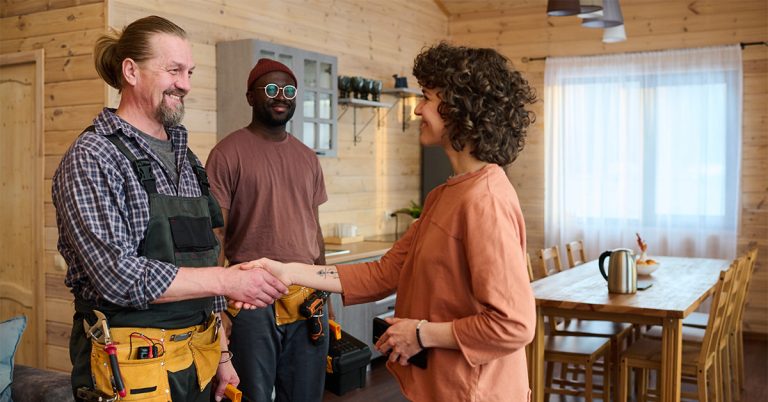
You’re already worried about the damage when the phone starts ringing. A truck pulls into your driveway, and a contractor knocks on your door offering you a free inspection. He promises to “handle everything with the insurance company.”
While many contractors are honest professionals, major storms, fires, floods, and other disasters can also attract scammers looking to take advantage of homeowners during stressful situations. Unfortunately, these scams are far from rare.
The Federal Trade Commission’s (FTC) most recent fraud data shows consumers filed 81,925 home improvement-related complaints in 2024, while separate Better Business Bureau (BBB) data found the median loss from a home improvement scam was approximately $1,800.
Unfortunately, it happens all too often, and when repairs feel urgent and emotions are running high, it can be easy to make decisions that lead to financial losses, poor workmanship, claim disputes, or unfinished projects.
The good news is that most contractor fraud follows recognizable patterns. By understanding how the insurance claims process works and learning a few warning signs, homeowners can better protect themselves while getting their homes repaired properly.
Let’s dive in.
Topics Covered
- Why Contractor Fraud Often Increases After Disasters
- New England Homeowner Alert
- The Most Common Contractor Fraud Schemes
- Understanding the Insurance Claim Process
- Understanding Insurance Adjusters
- What Is a Public Adjuster?
- Understanding Assignment of Benefits (AOB)
- How to Vet a Contractor Before Hiring
- Red Flags During the Repair Process
- What to Do If You Suspect Contractor Fraud
- Homeowner Checklist: Before You Sign Any Repair Contract
Why Contractor Fraud Increases After Disasters
When a major weather event or property loss affects an entire community, demand for contractors can surge almost overnight.
Local roofing companies, restoration firms, electricians, plumbers, and other tradespeople may suddenly receive hundreds of calls. Homeowners are competing for limited labor, materials, and scheduling availability.
Fraudsters know this and often target communities affected by:
- Windstorms
- Nor’easters
- Hurricanes and tropical storms
- Hail events
- Ice storms
- Heavy snow damage
- Fallen trees
- House fires
- Water damage from frozen or burst pipes
- Flooding and storm-related water intrusion
The combination of urgency, stress, and confusion can create an environment where homeowners are more likely to sign contracts quickly or overlook warning signs they might normally catch.
Many scams rely on a simple strategy: convince the homeowner that immediate action is required before they have time to verify credentials, review paperwork, or speak with their insurance company.
New England Homeowner Alert
New England homeowners face several unique challenges after major storms:
- Older housing stock that may require specialized repairs
- Historic homes with unique building materials
- Nor’easters that can produce widespread wind and water damage
- Ice dams and roof leaks during winter
- Frozen pipes during prolonged cold snaps
- Heavy snow loads that can damage roofs and structures
- Coastal storms that combine wind, rain, and flooding concerns
When large numbers of homes are damaged at the same time, contractor demand often exceeds supply. This can attract out-of-state contractors who arrive after major storms looking for work. While many are legitimate businesses, others may disappear once payments are collected or repairs are completed poorly.
Taking a little extra time to verify credentials can save significant headaches later.
The Most Common Contractor Fraud Schemes
Understanding how contractor fraud typically works is one of the best ways to avoid becoming a victim.
Storm Chasers
The term “storm chaser” refers to contractors who travel from disaster area to disaster area seeking repair work after major weather events.
Not every out-of-state contractor is fraudulent. Some legitimate companies are experts at assisting communities after large-scale disasters. However, homeowners should exercise caution when a contractor:
- Shows up uninvited
- Knocks on doors immediately after a storm
- Claims to have noticed damage from the street
- Pressures you to sign immediately
- Cannot provide local references
- Lacks a permanent business address
A reputable contractor should be willing to provide proof of insurance, references, licensing information, and a detailed written estimate.
“We’ll Handle Everything With Your Insurance Company”
This statement is not automatically a red flag.
Many reputable restoration and roofing contractors communicate with insurance adjusters regarding repair scopes and estimates on a routine basis. It’s what professionals do.
However, homeowners should understand that contractors and insurance companies play different roles.
Generally:
- The insurance company evaluates coverage under the policy.
- The adjuster assesses damage and repair costs before the contractor can begin work.
- The contractor performs repairs.
- The homeowner makes final decisions regarding the property.
Be cautious if a contractor:
- Guarantees claim approval
- Promises a specific settlement amount
- Claims they can obtain coverage for damage regardless of policy terms
- Encourages misleading information during the claims process
No contractor can guarantee how an insurance claim will be handled.
Requests for Large Upfront Payments
Most contractors require some form of deposit before work begins. That’s not unusual. However, homeowners should be cautious when asked for:
- Full payment before work starts
- Extremely large upfront deposits
- Cash-only payments
- Immediate payment before receiving written documentation
In some fraud cases, homeowners pay substantial deposits only to discover that work never begins, or materials never arrive. A detailed contract and reasonable payment schedule tied to project milestones can help protect both parties.
Deductible Fraud
One of the most common warning signs involves contractors offering to “waive” or “cover” a homeowner’s deductible.
Examples include:
- “Don’t worry about your deductible.”
- “We’ll absorb it.”
- “Insurance will cover everything.”
- “We’ll hide it elsewhere in the estimate.”
While laws vary by state, deductible manipulation can create serious problems and may constitute insurance fraud in certain circumstances.
Homeowners should be skeptical of any contractor encouraging them to avoid paying their deductible through questionable accounting practices.
If something sounds too good to be true, it probably is.
Inflated Estimates and Fraudulent Billing
This is another scheme that involves artificially increasing repair costs.
Examples may include:
- Charging for repairs that were never completed
- Billing for materials that were never installed
- Exaggerating the extent of damage
- Including unnecessary work
- Submitting duplicate charges
Most contractors are honest professionals who provide accurate estimates. Nevertheless, homeowners should review proposals carefully and ask questions whenever something seems unclear.
Obtaining multiple estimates can often provide useful context.
Signing Incomplete Contracts
Never sign paperwork that contains:
- Blank spaces
- Missing costs
- Undefined scopes of work
- Missing materials specifications
- Unclear payment schedules
- Missing completion expectations
A rushed signature today can create disputes months later. Take time to read every document before signing.
Understanding the Insurance Claim Process
Many contractor scams succeed because homeowners are unfamiliar with how insurance claims typically work. A basic understanding of the process can make it easier to identify questionable advice.
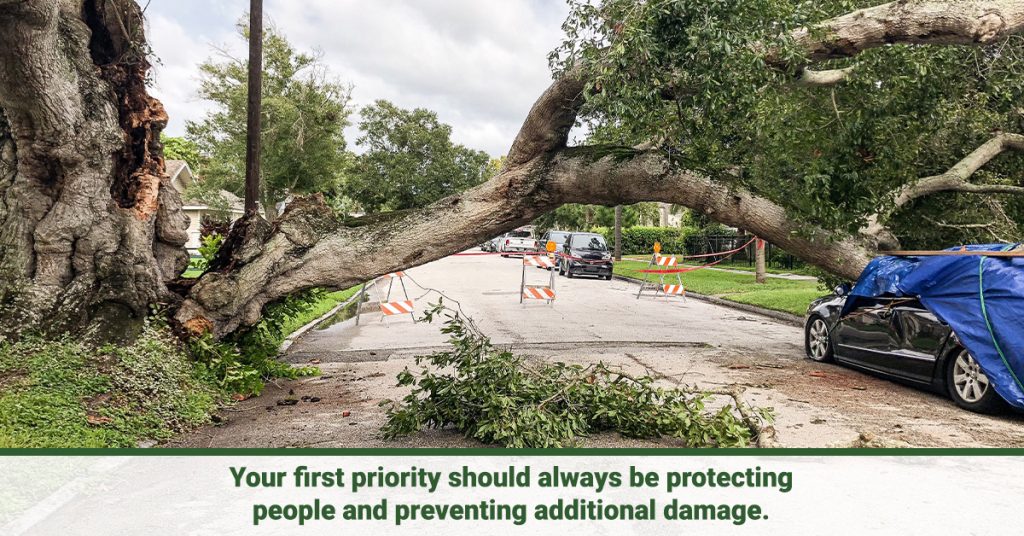
Step 1: Ensure Safety
Your first priority should always be protecting people and preventing additional damage.
Depending on the situation, this may include:
- Shutting off water
- Securing exposed areas
- Arranging emergency tarping
- Boarding damaged windows
- Contacting emergency restoration services
Step 2: Document the Damage
Before repairs begin, document conditions thoroughly whenever possible. Helpful documentation includes:
- Photos
- Videos
- Receipts
- Temporary repair expenses
- Damaged personal property inventories
Detailed documentation often becomes valuable during the claim process.
Step 3: Contact Your Insurance Company
Notify your insurer promptly. Early communication allows the company to:
- Open the claim
- Explain next steps
- Schedule inspections if necessary
- Provide guidance regarding emergency repairs
Your insurance company can also answer any questions you may have about the process and advise you on things you might not have yet considered.
Step 4: Obtain Repair Estimates
Once the claim process is underway, homeowners can begin obtaining estimates from qualified contractors.
Comparing estimates often helps identify unusual pricing or inconsistencies. When possible, it’s a good idea to get at least three quotes since prices can vary widely from contractor to contractor.
Step 5: Complete Repairs
After scope and payment issues are resolved, repairs can proceed.
Good communication between homeowners, contractors, and insurers helps reduce misunderstandings throughout the project.
Scenario: Windstorm Roof Damage
Imagine a New Hampshire homeowner discovers missing shingles after a severe windstorm.
The next morning, a contractor appears at the door and says, “Your insurance company will buy you a brand-new roof. Just sign this paperwork and we’ll take care of everything.”
While it may be tempting to move quickly, homeowners should avoid signing repair contracts before understanding how the claim will be handled. A better approach would be to:
- Document the damage with photos and notes.
- Contact the insurance company and open a claim.
- Allow the adjuster to inspect the damage if required.
- Review what damage is covered and what repairs have been approved.
- Obtain estimates from reputable contractors.
- Compare contractor recommendations with the insurer’s scope of work.
- Carefully review any contracts before signing.
In many cases, contractors and insurance companies may initially disagree on pricing or the extent of damage. These differences can often be resolved through additional documentation or supplemental estimates. Taking time to understand both the contractor’s proposal and the insurer’s assessment can help homeowners avoid surprises later in the repair process.
Understanding Insurance Adjusters
Insurance adjusters evaluate property damage and estimate repair costs according to policy terms. You may encounter:
Staff Adjusters
These are employees of your insurance company.
Independent Adjusters
These are third-party professionals working on behalf of insurance companies. Their role is to assess covered damages and help determine appropriate claim payments based on policy provisions.
They don’t perform repairs or choose your contractor for you.
Understanding Assignment of Benefits (AOB)
One topic homeowners often encounter during restoration projects is an Assignment of Benefits, commonly called an AOB.
An AOB is a legal agreement that may transfer certain insurance claim rights from the homeowner to a contractor or restoration company. Depending on the agreement, it may allow a contractor to:
- Communicate directly with the insurer
- Submit invoices
- Receive payments directly
- Pursue portions of the claim process
Some restoration companies use AOB agreements to simplify administration and payment procedures. However, homeowners need to read these documents carefully. Questions worth asking include:
- What rights am I transferring?
- Is the transfer limited or broad?
- Can I revoke the agreement?
- How will payments be handled?
- What happens if disputes arise?
Many homeowners don’t realize they may be signing away rights related to their claim. That doesn’t mean every AOB is problematic, but it does mean every homeowner should fully understand the document before signing.
If something is unclear, ask questions or seek professional guidance before proceeding. Err on the side of caution.
How to Vet a Contractor Before Hiring
A little research upfront can go a long way. Here’s what you can do to ensure you’re selecting a fully licensed and insured contractor you can rely on.
Verify Licensing Requirements
Requirements vary by state and trade, so be sure to confirm licensing or registration requirements in your area before hiring.
Verify Insurance Coverage
Before hiring a contractor, ask for proof of insurance rather than simply taking their word for it. Proper insurance coverage helps protect both the contractor and the homeowner if an accident, injury, or property damage occurs during the project. A reputable contractor should be willing to provide documentation upon request.
Ask for proof of:
- General liability insurance
- Workers’ compensation coverage when applicable
Confirm Local Presence
While not every out-of-town contractor is a scammer, homeowners should be cautious when dealing with companies that appear immediately after a storm and have little connection to the local community. An established local presence often makes it easier to verify a company’s reputation and seek support if issues arise after the work is completed.
Look for:
- Established business history
- Local references
- Physical business address
- Consistent local reputation
Read Reviews Carefully
Online reviews can be a valuable research tool, but they should be evaluated thoughtfully. Instead of focusing solely on a company’s star rating, spend a few minutes reading actual customer experiences. Patterns often reveal far more than a single glowing or negative review.
Instead of focusing only on star ratings, look for:
- Detailed customer experiences
- Consistent patterns
- Recent reviews
- Responses to complaints
Ask Good Questions
A trustworthy contractor should welcome reasonable questions and be able to explain their process clearly. Asking questions upfront can help homeowners better understand expectations, avoid misunderstandings, and feel more confident before signing a contract.
Consider asking:
- How long have you served this area?
- Can you provide references?
- Who will perform the work?
- How are change orders handled?
- What warranties are included?
- How are payments structured?
- What is the expected timeline?
Professional contractors should welcome reasonable questions.
Red Flags During the Repair Process
Even after hiring a contractor, homeowners should remain engaged throughout the project and watch for any of the following:
High-Pressure Change Orders
Not every change order is suspicious. When a contractor gets into a project, they may uncover common hidden damage from:
- Water losses
- Fire damage
- Roof leaks
- Structural failures
These can result in legitimate change orders. However, those change orders should clearly explain:
- Why additional work is needed
- Associated costs
- Supporting documentation
Repeated unexplained increases deserve closer review. Beware of sudden price increases.
Poor Communication
Common warning signs often include:
- Missed appointments
- Unreturned calls
- Vague explanations
- Missing paperwork
- Failure to provide updates
Strong communication is often a sign of a well-managed project from a reputable contractor.
Poor Workmanship
Watch for these signs of poor workmanship to avoid unnecessary repairs, and potentially more damage to your home later:
Roofing
- Improper flashing installation
- Incorrect shingle installation
- Inadequate ventilation work
Water Damage Repairs
- Insufficient drying
- Hidden moisture issues
- Increased mold risk
Fire Restoration
- Incomplete smoke remediation
- Lingering odor issues
- Improper cleaning methods
Poor workmanship can create future problems long after the original claim is closed.
What to Do If You Suspect Contractor Fraud
Most contractors are honest professionals, but if something feels off during a repair project, don’t ignore your instincts. Unexpected charges, poor communication, pressure tactics, or work that doesn’t match what was promised can all be signs that a closer look is needed.
Acting quickly can help protect both your finances and your insurance claim. If you suspect fraud or deceptive business practices, consider taking the following steps:
Stop Additional Payments
If there is a legitimate concern about the contractor’s conduct, avoid making further payments until you understand the situation. Continuing to pay while questions remain unresolved can make it more difficult to recover funds later if a dispute arises.
Gather Documentation
Good records are often your strongest defense. Collect copies of contracts, invoices, receipts, photographs, text messages, emails, and any other communications related to the project. Detailed documentation can help clarify misunderstandings and may prove valuable if outside assistance becomes necessary.
Ask for Clarification in Writing
Not every issue is fraud. Sometimes disputes arise from miscommunication, scheduling delays, or unexpected project complications. Before assuming the worst, give the contractor an opportunity to explain the issue and request responses in writing whenever possible.
Notify Your Insurance Company
If the repairs involve an insurance claim, contact your insurer if you believe inaccurate information, inflated estimates, or questionable billing practices may be involved. Your claims representative may be able to help identify potential concerns and explain available options.
Contact Consumer Protection Agencies
State consumer protection offices, licensing boards, and attorney general offices may be able to assist with complaints involving deceptive business practices. Reporting concerns can also help protect other homeowners from similar experiences.
Report Suspected Insurance Fraud
If you believe insurance fraud may be occurring, consider reporting the issue through the appropriate state insurance department or fraud-reporting resources. Insurance fraud affects policyholders, insurers, and communities alike, and reporting suspicious activity helps support a fair claims process for everyone.
The most important thing to remember is that acting early is usually easier than resolving a problem after a project is complete. Asking questions, documenting concerns, and seeking guidance when something doesn’t seem right can help homeowners avoid larger issues down the road.
Homeowner Checklist: Before You Sign Any Repair Contract
Before committing to any contractor, make sure you can check these boxes:
☐ Document all damage with photos and videos
☐ Contact your insurance company promptly
☐ Obtain written estimates
☐ Verify licensing or registration requirements
☐ Verify contractor insurance coverage
☐ Confirm a local business presence
☐ Check references and reviews
☐ Read every contract carefully
☐ Avoid signing documents with blank spaces
☐ Understand payment schedules
☐ Ask questions about change orders
☐ Understand any Assignment of Benefits agreement
☐ Be cautious of deductible-related promises
☐ Keep copies of all paperwork ☐ Never allow urgency to replace due diligence
The Bottom Line
Recovering from storm damage, fire losses, water damage, or other property claims is stressful enough without worrying about contractor fraud.
Fortunately, most contractors are honest professionals dedicated to helping homeowners restore their properties after difficult events. The key is knowing how to identify warning signs before they become costly problems.
By documenting damage, understanding the insurance claims process, verifying credentials, reviewing contracts carefully, and asking questions when something seems unclear, homeowners can significantly reduce their risk while ensuring repairs are completed properly.
A little patience and due diligence today can help protect both your home and your wallet tomorrow.
Need to learn more about contractor fraud?
Our agents are ready to help, so contact us to learn how we can customize your insurance policies to meet your needs.
*Disclaimer: We offer content for informational purposes; Co-operative Insurance Companies may not provide all the services or products listed here. Please get in touch with your local agent to learn how we can help with your insurance needs.
Sources
Consumer Financial Protection Bureau (CFPB). How Do I Avoid Scams and Fraud After a Disaster? https://www.consumerfinance.gov/ask-cfpb/how-do-i-avoid-scams-and-fraud-after-a-disaster-en-1529
Federal Trade Commission (FTC). How to Avoid Scams After Weather Emergencies and Natural Disasters. https://consumer.ftc.gov/articles/how-avoid-scams-after-weather-emergencies-and-natural-disasters
Federal Emergency Management Agency (FEMA). Disaster Fraud. https://www.fema.gov/about/offices/security/disaster-fraud
Forbes. Planning A Home Project This Spring? Here’s How To Avoid Losing $1,800 To Scammers. https://www.forbes.com/advisor/personal-loans/bbb-home-improvement-scams-lmandp5/?utm_source=chatgpt.com
Insurance Information Institute (Triple-I). How to File a Homeowners Insurance Claim. https://www.iii.org/article/how-to-file-a-homeowners-claim
National Association of Insurance Commissioners (NAIC). How Can I Avoid Getting Scammed by a Contractor? https://content.naic.org/article/how-can-i-avoid-getting-scammed-contractor
National Association of Insurance Commissioners (NAIC). After the Storm: Read the Fine Print Before Signing Away Your Insurance Benefits. https://content.naic.org/article/consumer-insight-after-storm-read-fine-print-avoid-signing-away-your-insurance-benefits
National Insurance Crime Bureau (NICB). Roofing Fraud Requires Vigilance.https://www.nicb.org/news/blog/roofing-fraud-requires-vigilance