

Imagine you’re hosting a backyard barbecue on a warm summer afternoon. Friends and neighbors are enjoying themselves when someone trips over a garden hose and falls. Or maybe it’s the middle of winter in New Hampshire or Vermont, and a visitor slips on an icy walkway while coming to your front door.
Your first priority is making sure they’re okay, but what if their injuries are serious enough to need medical attention? Who is going to pay for that?
Many standard homeowners insurance policies include Medical Payments to Others coverage, although coverage, limits, and availability vary by insurer and policy. If your policy includes this coverage, it may help pay eligible medical expenses for a guest who is injured in certain covered accidents involving your property. This coverage is designed to address certain injuries quickly, often without first determining who was at fault.
It’s also one of the most misunderstood parts of a homeowners insurance policy.
In this guide, we’ll explain what Medical Payments to Others coverage is, when it may apply, what it doesn’t cover, and how it differs from both personal liability coverage and health insurance.
Topics Covered
- What Is Medical Payments to Others Coverage?
- 5 Common Situations Where Medical Payments to Others Coverage May Help
- What Medical Expenses May Be Covered?
- What Isn’t Covered?
- Medical Payments to Others vs. Personal Liability Coverage
- Medical Payments to Others Isn’t an Admission of Fault
- What Should You Do If Someone Is Injured at Your Home?
- 4 Ways to Reduce the Risk of Guest Injuries
- Common Myths About Medical Payments to Others Coverage
- Questions to Ask Your Insurance Agent
- Review Your Coverage Before You Need It
- Related Reading
What Is Medical Payments to Others Coverage?
Medical Payments to Others coverage is intended to help pay eligible medical expenses if someone who doesn’t live in your household is injured in certain accidents involving your property or personal activities covered by your homeowners policy.
Many standard homeowners insurance policies include Medical Payments to Others coverage. However, coverage, limits, exclusions, and availability vary by insurer, policy form, endorsements, and applicable state regulations, so it’s important to review your own policy or speak with your insurance agent.
Unlike Personal Liability coverage, Medical Payments to Others coverage is generally considered no-fault coverage. That means it may apply without first establishing that you were legally responsible for the injury, provided the incident meets your policy’s requirements.
Its purpose is practical.
Not every accident results in a lawsuit. Many involve relatively minor injuries that require medical attention but don’t necessarily lead to legal action. Medical Payments coverage can help address those expenses while allowing everyone involved to focus on recovery.
That doesn’t mean every injury is automatically covered. Whether coverage applies depends on your policy’s language, exclusions, coverage limits, and the specific facts surrounding the incident.
Medical Payments to Others at a Glance
Many standard homeowners insurance policies include this coverage, but availability and limits vary by insurer and policy. Medical Payments to Others coverage may:
- Help pay eligible medical expenses if a guest is injured in certain accidents covered by your homeowners policy.
- Apply regardless of who was at fault, subject to your policy’s terms and conditions.
- Help resolve relatively minor injury claims before they become larger disputes.
- Cover medical expenses only – it does not replace personal liability coverage.
- Exclude injuries to you and members of your household.
- Be subject to policy limits, exclusions, and other conditions.
Every homeowners policy is different, so it’s important to review your specific coverage with your insurance agent.
5 Common Situations Where Medical Payments to Others Coverage May Help
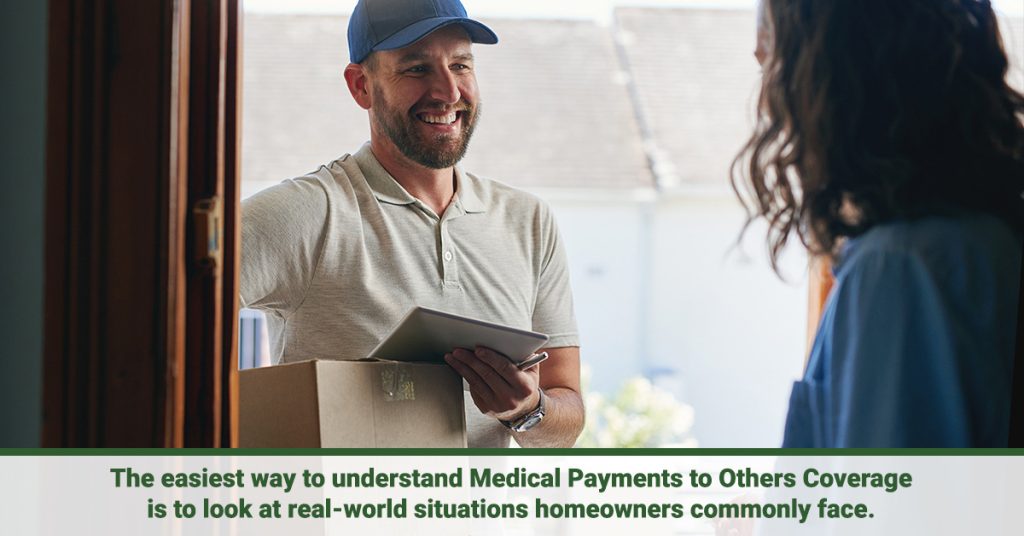
The easiest way to understand this coverage is to look at real-world situations homeowners commonly face.
A Guest Slips on Your Icy Walkway
Winter weather is part of life in New England.
If a friend slips on an icy walkway while visiting your home and needs medical treatment, your homeowners policy’s Medical Payments to Others coverage may help pay eligible medical expenses if the circumstances fall within your policy’s coverage.
Whether coverage applies depends on your particular policy and the facts surrounding the accident.
A Child Falls During a Backyard Birthday Party
Backyard swing sets, trampolines, and play equipment create wonderful memories, but they also increase the potential for accidental injuries.
If a visiting child falls and requires medical care, Medical Payments to Others coverage may help pay for eligible medical expenses, even if no one believes the homeowner acted negligently.
If the injuries are severe or questions arise about property maintenance or supervision, Personal Liability coverage could also become relevant.
A Delivery Driver Trips on Uneven Steps
Package deliveries happen almost every day.
If a delivery driver trips on an uneven walkway or loose step while bringing a package to your home, it’s important to focus first on their well-being.
After the situation is under control, notify your insurance company promptly so they can explain how your policy may respond and begin gathering information if necessary.
A Neighbor Is Injured While Helping with Yard Work
It’s common for neighbors to lend each other a hand.
If someone helping you rake leaves, move furniture, or trim trees suffers an accidental injury, your homeowners policy may provide Medical Payments to Others coverage depending on the circumstances.
Every situation is unique, so avoid assuming coverage applies without speaking with your insurance company.
A Guest Is Injured by a Dog
Dog-related injuries are among the most common liability concerns for homeowners.
Depending on your homeowners policy, the circumstances surrounding the incident, your dog’s history, and any applicable exclusions, Medical Payments to Others coverage may help pay eligible medical expenses for an injured guest.
However, more serious injuries can also involve Personal Liability coverage, and some policies have breed restrictions, animal liability exclusions, or other limitations.
If you own a dog, understanding your liability protection before an accident occurs is especially important.
Pro tip: Dog-related injuries can involve more than just Medical Payments to Others coverage. Learn how homeowners insurance may respond, what factors can affect coverage, and steps you can take to reduce your risk in our guide: Dog Bite Liability Claims: What Every Homeowner Should Know.
What Medical Expenses May Be Covered?
Medical Payments to Others coverage may help pay reasonable and necessary medical expenses related to a covered injury.
Depending on the policy and the circumstances, eligible expenses may include:
- Emergency room treatment
- Ambulance transportation
- Physician visits
- Hospital care
- Diagnostic imaging such as X-rays
- Surgery
- Dental injuries
- Other eligible medical expenses covered by the policy
This isn’t an exhaustive list. Every insurance company writes policies differently, and your homeowners policy determines exactly which expenses may be eligible. If you have questions about your coverage, your insurance agent can help explain what your policy includes.
What Isn’t Covered?
Understanding what Medical Payments to Others coverage doesn’t cover is just as important as understanding what it does.
Common exclusions and limitations often include:
- Injuries to you
- Injuries to family members or others living in your household
- Intentional acts
- Damage to someone else’s property
- Business-related activities conducted from the home
- Auto-related accidents that fall under automobile insurance
- Situations specifically excluded by your homeowners policy
Coverage also isn’t unlimited. Your policy includes Medical Payments to Others coverage limit that applies to eligible claims.
If you’re unsure what your policy covers, reviewing it with your insurance agent before an accident occurs can help eliminate surprises later.
Medical Payments to Others vs. Personal Liability Coverage
These two coverages often work together, but they serve very different purposes.
| Medical Payments to Others | Personal Liability |
| Often applies regardless of fault | Typically involves questions of legal responsibility |
| Designed for relatively minor medical expenses | Designed for larger injury or property damage claims |
| Covers eligible medical expenses | May cover legal defense costs, settlements, judgments, and certain property damage |
| Can help resolve smaller incidents quickly | Helps protect your financial assets if you’re found legally liable |
Think of Medical Payments to Others as an early response to relatively minor injuries.
If an injury becomes more serious, someone alleges negligence, or a lawsuit is filed, Personal Liability coverage often becomes the more significant part of your homeowners policy.
Medical Payments to Others Coverage Is Different from Health Insurance
One of the biggest misconceptions homeowners have is believing that if an injured guest has health insurance, homeowners insurance no longer matters, but the reality is more nuanced.
Health insurance generally helps pay the injured person’s medical expenses according to the terms of their health insurance plan.
Medical Payments to Others coverage, on the other hand, is part of your homeowners insurance policy. Depending on the circumstances and your policy’s language, it may also help pay eligible medical expenses associated with a covered accident.
How these coverages interact depends on the specific facts of the claim and the terms of the applicable insurance policies.
Rather than assuming one policy replaces the other, it’s best to notify your insurance company whenever an accident occurs that could potentially involve your homeowners coverage.
Medical Payments to Others Isn’t an Admission of Fault
One of the most common misconceptions about homeowners insurance is that using Medical Payments to Others coverage automatically means you’ve admitted fault for an accident.
That’s generally not how this coverage is intended to work.
Medical Payments to Others is designed to help pay eligible medical expenses for certain accidental injuries without first determining legal liability. In other words, providing Medical Payments to Others coverage doesn’t automatically establish that you were negligent or legally responsible for what happened.
If an injury is more serious, questions arise about how the accident occurred, or if someone files a lawsuit, your homeowners policy’s personal liability coverage may become the more significant part of the claims process.
Every claim is unique, and your insurance company will evaluate the facts, policy language, and applicable laws before determining how your policy responds.
What Should You Do If Someone Is Injured at Your Home?
Accidents can be stressful but knowing what to do immediately afterward can help protect both the injured person and your ability to navigate the claims process smoothly.
1. Make Sure Everyone Is Safe
Your first priority should always be the injured person’s health and safety.
If the injury appears serious, call 911 immediately. Even injuries that seem minor at first can worsen over time, so don’t hesitate to seek professional medical attention when appropriate.
2. Document What Happened
Once the situation is under control, write down the basic facts while they’re still fresh.
Helpful information may include:
- The date and time
- Where the accident occurred
- Weather conditions
- What happened immediately before the injury
- Names and contact information for anyone who witnessed the incident
The more accurately you document the event, the easier it may be to answer questions later.
3. Take Photographs If It’s Safe to Do So
If appropriate, photograph the area where the accident occurred.
For example:
- Icy walkways
- Broken steps
- Loose handrails
- Uneven sidewalks
- Toys or equipment involved
- Outdoor lighting conditions
Don’t alter the scene before documenting it unless doing so is necessary to prevent another injury.
4. Avoid Admitting Fault
It’s natural to want to apologize when someone gets hurt, and expressing concern is appropriate. However, avoid making statements such as:
- “This was my fault.”
- “I’ll pay for everything.”
- “I should have fixed that.”
Determining whether coverage applies, and whether anyone is legally responsible, depends on the facts surrounding the incident and the terms of the applicable insurance policy.
5. Notify Your Insurance Company Promptly
Even if the injury appears minor, it’s a good idea to notify your insurance company as soon as practical. Early reporting allows your insurer to:
- Answer coverage questions.
- Explain next steps.
- Begin gathering information if necessary.
- Help manage the claim appropriately.
Waiting too long to report an incident can complicate the claims process.
6. Keep Any Documentation
Save any information related to the incident, including:
- Medical bills you receive
- Photographs
- Emails
- Written correspondence
- Claim information
- Receipts related to the incident
Good documentation can help if questions arise later.
4 Ways to Reduce the Risk of Guest Injuries
While accidents can’t always be prevented, regular home maintenance can reduce common hazards that lead to injuries.
Inspect and Maintain Walkways
Many guest injuries happen because of everyday hazards that are easy to overlook. Regularly inspecting and maintaining your property can help reduce the risk of slips, trips, and falls throughout the year.
As you walk around your home, look for common hazards such as:
- Snow and ice during the winter
- Cracked sidewalks
- Uneven pavers
- Loose deck boards
- Broken or uneven steps
- Raised tree roots
- Torn carpeting near entrances
- Garden hoses, toys, or other temporary trip hazards
Promptly repairing damage, clearing walkways, and removing obstacles can help create a safer environment for your family, guests, and delivery drivers.
Improve Outdoor Lighting
Poor lighting makes it difficult for visitors to see steps, changes in elevation, or obstacles.
Replace burned-out bulbs and consider adding lighting near:
- Walkways
- Driveways
- Entrances and exits
- Deck stairs
Maintain Handrails and Decks
Loose railings and deteriorating decks can create significant safety hazards.
Inspect them regularly, particularly after harsh New England winters, and repair any problems promptly.
Secure Pets When Guests Visit
Even friendly dogs can become excited or anxious when visitors arrive. If guests are uncomfortable around animals, or if your dog is easily startled, consider securing your pet during gatherings to reduce the chance of accidental injuries.
Common Myths About Medical Payments to Others Coverage
Myth: If Someone Has Health Insurance, My Homeowners Insurance Doesn’t Matter.
Reality: Health insurance and homeowners insurance serve different purposes. Depending on the circumstances and your policy, Medical Payments to Others coverage may also help pay eligible medical expenses.
Myth: Using Medical Payments to Others Coverage Means I Admitted Fault.
Reality: Medical Payments to Others coverage is generally designed to help address eligible medical expenses without first determining legal liability.
Myth: Medical Payments to Others Covers Everyone Who Gets Hurt at My Home.
Reality: Medical Payments to Others coverage generally does not apply to you or members of your household, and every policy contains exclusions, limitations, and conditions.
Myth: Medical Payments to Others and Personal Liability Are the Same Coverage.
Reality: They work together, but they’re designed for different situations.
Medical Payments to Others typically addresses eligible medical expenses associated with relatively minor injuries, while Personal Liability provides broader protection if you’re found legally responsible for bodily injury or property damage.
Questions to Ask Your Insurance Agent
Every homeowner’s situation is different.
If you’re reviewing your homeowners policy, consider asking:
- What is my Medical Payments to Others coverage limit?
- What types of accidents are generally covered under my policy?
- What exclusions should I understand?
- How does Medical Payments to Others differ from my Personal Liability coverage?
- Have recent renovations or improvements changed my insurance needs?
- Should I review my coverage after installing a pool, playset, trampoline, or other recreational equipment?
- Are there endorsements available that better fit my household?
A brief policy review today may help prevent misunderstandings if an accident occurs tomorrow.
Review Your Coverage Before You Need It
Most homeowners don’t think about Medical Payments to Others coverage until someone gets hurt.
By then, they’re often trying to understand their policy during an already stressful situation.
Taking time now to understand how your homeowners insurance works can help you feel more confident if an unexpected accident occurs.
If your homeowners policy includes Medical Payments to Others coverage, it’s just one part of the broader protection your homeowners insurance may provide. When combined with Personal Liability coverage and your other policy protections, it helps provide financial security when life’s unexpected moments happen.
If it’s been a while since you’ve reviewed your homeowners insurance – or if you’ve recently purchased a home, completed renovations, or made significant changes to your property –consider scheduling a policy review with your local Co-operative Insurance agent. Together, you can discuss your coverage, answer questions, and help ensure your policy reflects your current needs.
Related Reading
To continue learning about homeowners insurance, explore these additional resources:
- How to Understand Your Homeowners Insurance Policy
- Homeowners Insurance Gaps You Didn’t Know You Had (But Should Fix Today)
- Homeowners Insurance vs. Pet Insurance: Understanding Your Options and Choosing the Right Coverage
Need to learn more about Medical Payments to Others coverage?
Our agents are ready to help, so contact us to learn how we can customize your insurance policies to meet your needs.
*Disclaimer: We offer content for informational purposes; Co-operative Insurance Companies may not provide all the services or products listed here. Please get in touch with your local agent to learn how we can help with your insurance needs.
Sources
Allstate. What Is Medical Payments Coverage? https://www.allstate.com/resources/car-insurance/medical-payments-coverage
Insurance Information Institute (III). What is covered by standard homeowners insurance? https://www.iii.org/article/what-covered-standard-homeowners-policy
Insurance Information Institute (III) – Homeowners Insurance Resource Center
https://www.iii.org/insuranceindustryblog/homeowners-insurance/
National Association of Insurance Commissioners (NAIC). Homeowners Insurance.
https://content.naic.org/insurance-topics/homeowners-insurance
National Association of Insurance Commissioners (NAIC) – Homeowners Insurance Consumer Guide (PDF). https://content.naic.org/sites/default/files/publication-hoi-pp-consumer-homeowners.pdf
Progressive. What is medical payments coverage? https://www.progressive.com/answers/medical-payments-coverage/
Policygenius. Medical payments coverage (Coverage F) in home insurance — defined. https://www.policygenius.com/homeowners-insurance/what-is-medical-payments-coverage/