
Over the past decade, solar panels have gone from a niche upgrade to a common sight in neighborhoods across Vermont and New Hampshire. Between 2017 and early 2024, Vermont issued more than 16,000 solar permits while New Hampshire recorded over 18,600 residential solar installations during the same period. That growth isn’t accidental.
Falling equipment costs, rising electricity rates, generous federal incentives, and long-standing net-metering programs have made solar a realistic option for many New England homeowners.
But installing solar power here isn’t just a matter of putting panels on a roof and watching your electric bill drop. Vermont and New Hampshire homeowners face unique considerations, from snow loads and wind exposure to town-level permitting rules.
This guide is meant to help you understand what matters before your panels go up: the types of systems available, how state policies differ, and where homeowners’ insurance fits into the planning process.
Topics Covered
- Understanding Your Solar System Options
- Grid-Tied Systems vs. Battery Backup
- Net Metering and Incentives: Vermont vs. New Hampshire
- Permits, Inspections, and Local Rules
- Structural and Snow-Load Realities
- Fire Codes and Emergency Access
- Climate-Specific Risks Homeowners Should Plan For
- How Homeowners’ Insurance Fits into Solar Planning
- A Practical Pre-Installation Checklist
Understanding Your Solar System Options
Before you start comparing incentives or signing contracts, it helps to understand how different system types affect both installation and your long-term risk.
Roof-Mounted vs. Ground-Mounted Systems
Most homeowners in Vermont and New Hampshire choose roof-mounted systems. These panels attach directly to your roof and become a permanent part of your home. From an insurance perspective, roof-mounted panels are typically treated as part of the dwelling once they’re installed.
Ground-mounted systems sit on freestanding racks or poles somewhere on your property. They’re often chosen when roof space is limited, shading is an issue, or homeowners want maximum control over panel orientation.
That flexibility comes with trade-offs, since ground-mounted systems usually require:
- More zoning review
- Setback compliance
- Structural engineering
- Different insurance treatment (often under “other structures” coverage)
They can still be a great option, but they may require more upfront planning.
Grid-Tied Systems vs. Battery Backup
Most residential solar systems in both states are grid-tied. That means they connect to the utility grid and automatically shut down during a power outage to protect line workers. Many homeowners are surprised to learn that panels alone won’t keep their lights on during an outage.
If backup power is important to you, you’ll need battery storage. Batteries add resilience, but they also add:
- Cost
- Permitting steps
- Fire-safety considerations
- Insurance disclosure requirements
Modern battery systems are safe when properly installed, but insurers need to know they’re there since they can alter your homeowners’ insurance risk profile.
Net Metering and Incentives: Vermont vs. New Hampshire
Solar policy in Vermont and New Hampshire differ, so it’s important to understand how you might be affected depending on which state you live in.
Vermont’s Net-Metering Approach
Vermont has one of the most established net-metering programs in the country. Residential systems up to 25 kW qualify for a streamlined registration process, and excess energy typically earns credits close to the retail electricity rate.
Other Vermont-specific benefits include:
- Credits that roll over for up to 12 months
- No state or local property tax on systems under 50 kW
- Sales-tax exemption on solar equipment
Homeowners do need a Certificate of Public Good for grid-connected systems, but installers usually handle that paperwork.
New Hampshire’s Net-Metering Approach
New Hampshire also offers statewide net metering, with systems up to one megawatt eligible. Residential systems receive credits for:
- Energy supply charges
- Transmission charges
- A portion of distribution charges
However, some incentives have changed recently. New Hampshire repealed its residential solar rebate program in 2024, and property-tax exemptions depend on whether individual municipalities have adopted them.
If you’re in New Hampshire, it’s smart to check with your local officials or speak to a local insurance agent before assuming how your system will be taxed.
Permits, Inspections, and Local Rules
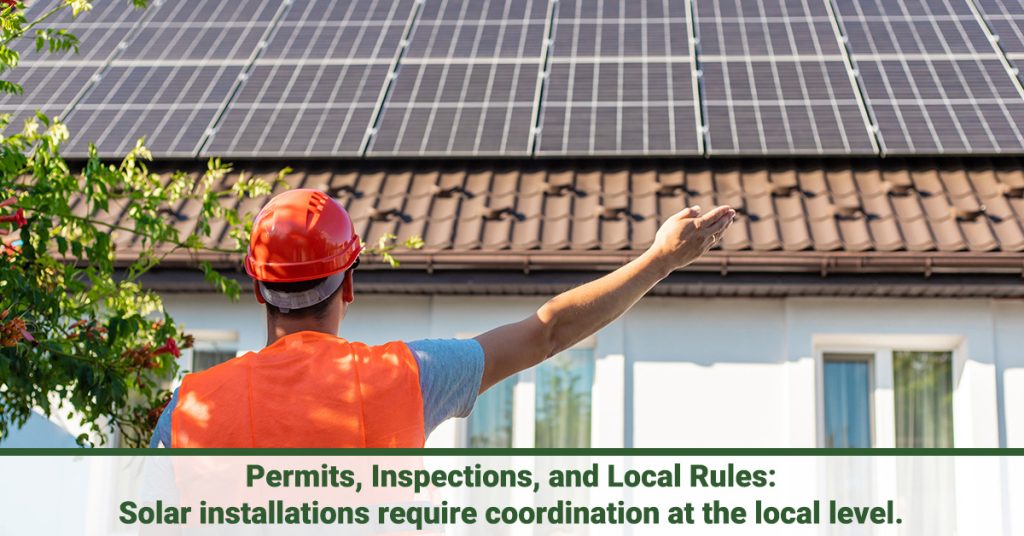
No matter which state you’re in, solar installations require coordination at the local level.
Typical Permits Involved
Most residential projects require:
- Electrical permits
- Building permits
- Utility interconnection approval
While Vermont and New Hampshire both limit unreasonable barriers to solar development, towns still enforce building and safety codes, and they often vary more than many homeowners expect.
Structural and Snow-Load Realities
Northern New England winters aren’t gentle. Installers must account for:
- Added roof weight
- Snow drifting behind panels
- Wind uplift forces
Some towns require a structural engineer’s review, especially if:
- The roof pitch is low
- There are multiple layers of shingles
- The home is older or has unique framing
These reviews aren’t red tape; they’re about protecting your home long-term.
Fire Codes and Emergency Access
Both states follow versions of the National Electrical Code that require rapid shutdown for rooftop solar. This allows firefighters to de-energize systems quickly during emergencies.
Fire codes also require:
- Clear roof access paths
- Labeled disconnects
- Panel setbacks near ridges and roof edges
Good installers plan for these details early, so they don’t delay inspections later.
Climate-Specific Risks Homeowners Should Plan For
Solar systems are built to handle harsh conditions, but Vermont and New Hampshire present a few unique challenges.
Snow Shedding and Ice Dams
Panels can cause snow to slide off roofs in large sheets, which can be hazardous around:
- Entryways
- Walkways
- Driveways
- Gutters
Snow guards and thoughtful panel placement help reduce these risks.
Wind and Tree Damage
Panels are engineered for high wind loads, but falling trees and branches remain one of the most common causes of solar-related property damage in forested areas.
Routine tree maintenance is one of the simplest ways to protect both your roof and your investment.
How Homeowners’ Insurance Fits into Solar Planning
Adding solar panels increases your home’s replacement cost and changes its risk profile.
In general:
- Roof-mounted systems are treated as part of the dwelling
- Ground-mounted systems often fall under other-structures coverage
- Coverage limits may need to be adjusted
- Battery systems should always be disclosed
Some utilities historically required higher liability limits for larger systems, and while requirements vary, it’s another reason insurance should be part of the conversation and not an afterthought.
A Practical Pre-Installation Checklist
Before moving forward with a solar panel installation project, it’s worth confirming:
- Your roof’s age and condition
- Structural capacity for snow and wind
- Installer licensing and permitting responsibilities
- Net-metering application steps
- Local property-tax treatment
- Insurance policy updates
- Fire-safety and shutdown compliance
A little planning here can prevent expensive fixes later.
Solar can offer real financial and environmental benefits for Vermont and New Hampshire homeowners, but state policies, local permitting, climate realities, and insurance considerations all play a role in how well a system performs over time.
At Co-op Insurance, we encourage homeowners considering solar to review their coverage early and work with licensed professionals at every stage of the process.
Frequently Asked Questions About Solar Installations in Vermont and New Hampshire
Q. Do solar panels work well in Vermont and New Hampshire’s climate?
A. Yes. Solar panels perform reliably in Vermont and New Hampshire, even with long winters and heavy snowfall. Cold temperatures can improve panel efficiency, and modern systems are designed to handle snow loads, wind, and freeze-thaw conditions common in northern New England.
Q. Do I need permits to install solar panels on my home?
A. In most cases, yes. Residential solar installations typically require building and electrical permits, along with utility interconnection approval. Permitting requirements vary by municipality, and Vermont grid-connected systems must also be registered with the Public Utility Commission. Licensed installers usually manage this process.
Q. Is my roof strong enough to support solar panels?
A. Many homes can support solar panels, but roof age, pitch, framing, and snow-load capacity all matter. In Vermont and New Hampshire, some towns require structural engineering review, especially for older homes, low-slope roofs, or roofs with multiple layers of shingles.
Q. Will my solar system provide power during an outage?
A. Most residential solar systems are grid-tied and automatically shut down during power outages for safety reasons. Homeowners who want backup power must install battery storage or a hybrid system, which adds cost and additional permitting considerations.
Q. How does net metering work in Vermont and New Hampshire?
A. Net metering allows homeowners to receive bill credits for excess electricity their solar system sends to the grid. Both Vermont and New Hampshire offer net metering, but credit structures, rollover rules, and administrative requirements differ by state and utility.
Q. How does installing solar affect homeowners’ insurance?
A. Installing solar panels increases a home’s replacement cost and may require coverage adjustments. While this article focuses on planning and regional considerations, homeowners should review their insurance policy as part of the installation process to ensure coverage reflects the added system.
Need to learn more about homeowners’ insurance?
Our agents are ready to help, so contact us to learn how we can customize your insurance policies to meet your needs.
*Disclaimer: We offer content for informational purposes; Co-operative Insurance Companies may not provide all the services or products listed here. Please get in touch with your local agent to learn how we can help with your insurance needs.
Sources
Building Energy Vermont. Solar Energy Questions.
https://www.buildingenergyvt.com/resources/solar-energy-questions/
EnergySage. New Hampshire solar rebates and incentives: 2025 guide.
https://www.energysage.com/local-data/solar-rebates-incentives/nh/
Eversource NH. New Hampshire Net Metering.
https://www.eversource.com/residential/about/doing-business-with-us/interconnections/new-hampshire/new-hampshire-net-metering
IRS. Residential Clean Energy Credit.
https://www.irs.gov/credits-deductions/residential-clean-energy-credit
National Fire Protection Association. There Are Many Factors to Consider When Providing Access to Roofs with a Photovoltaic System Installed.
https://www.nfpa.org/news-blogs-and-articles/blogs/2020/07/24/accessways-for-roof-mounted-photovoltaic-installations
Nationwide. Are solar panels covered by home insurance?
https://www.nationwide.com/lc/resources/home/articles/solar-panel-insurance
Renewable Energy Vermont. Solar Capacity Overview. https://www.revermont.org/what-does-solar-look-like-in-vermont/
U.S. Department of Energy. Homeowners Insurance & Solar. https://www.energy.gov/eere/solar/articles/will-i-save-money-solar-energy
Vermont Electric Co-op. Net Metering. https://vermontelectric.coop/net-metering